

When memory feels less dependable, the goal is not to turn everyday life into a rigid project. It is to make the next right action easier to see. Memory aids for mild cognitive impairment can create that breathing room by putting useful information where it is needed, at the moment it is needed. A familiar calendar, a single place for keys, or a short written routine can reduce the pressure to remember everything at once.
These supports are most helpful when they are ordinary. They should fit the life a person already has, respect the ways they prefer to do things, and make independence more possible. This guide offers practical ideas, not medical advice. It can sit alongside a conversation with a healthcare professional and may be especially useful for people exploring Lovejoy Institute’s Cognitive Continuity approach to everyday systems.
Start With a Clear Boundary
Mild cognitive impairment, often called MCI, describes changes in memory or thinking that are noticeable but do not necessarily stop a person from managing daily life independently. The experience is different for everyone. Alzheimers.gov explains that MCI can have several possible causes, which is one reason it is important not to draw conclusions from a forgotten appointment or a misplaced item alone.
Memory aids do not diagnose, treat, or cure anything. They are practical supports. Think of them as part of the environment, much like good lighting or a well-organized drawer. They can reduce repeated searching, make routines more visible, and help a person use their attention for the conversation, activity, or relationship in front of them.
Speak with a qualified healthcare professional about new, sudden, or worsening changes in memory, language, judgment, mood, or day-to-day abilities. That conversation is particularly important when a change affects safety, finances, driving, medication management, or the ability to care for oneself.
Choose Supports That Fit an Existing Routine
The most useful tool is rarely the fanciest one. It is the one that appears at the right time, in the right place, without creating another system to maintain. If someone already uses a paper calendar, a clearer paper calendar may be more useful than a new app. If they always set a cup by the coffee maker, a small routine card near that spot may work better than a reminder in a drawer.
Start by noticing one recurring snag. Is it leaving the house? Keeping track of appointments? Starting the laundry? Remembering what to bring to a visit? Choose one support for that one moment. The Alzheimer’s Society’s practical guide to memory aids and tools makes a similar point: the aid should be matched to a real task, not used simply because it is available.

10 Practical Memory Aids to Try
- One visible calendar. Keep appointments, visitors, deliveries, and important calls in one place. Put it where the day naturally begins, such as near the kitchen table or front door. A calendar split across several rooms and devices is easy to lose track of.
- A daily “first things” note. A short list can anchor the morning: breakfast, medication as prescribed, shower, a walk, or a call. Keep it realistic. Three to five items is easier to use than a page full of tasks.
- A landing place for essentials. A tray, hook, or small basket near the door gives keys, glasses, wallet, phone, and hearing aids one dependable home. Use the same place every time, even on an ordinary day.
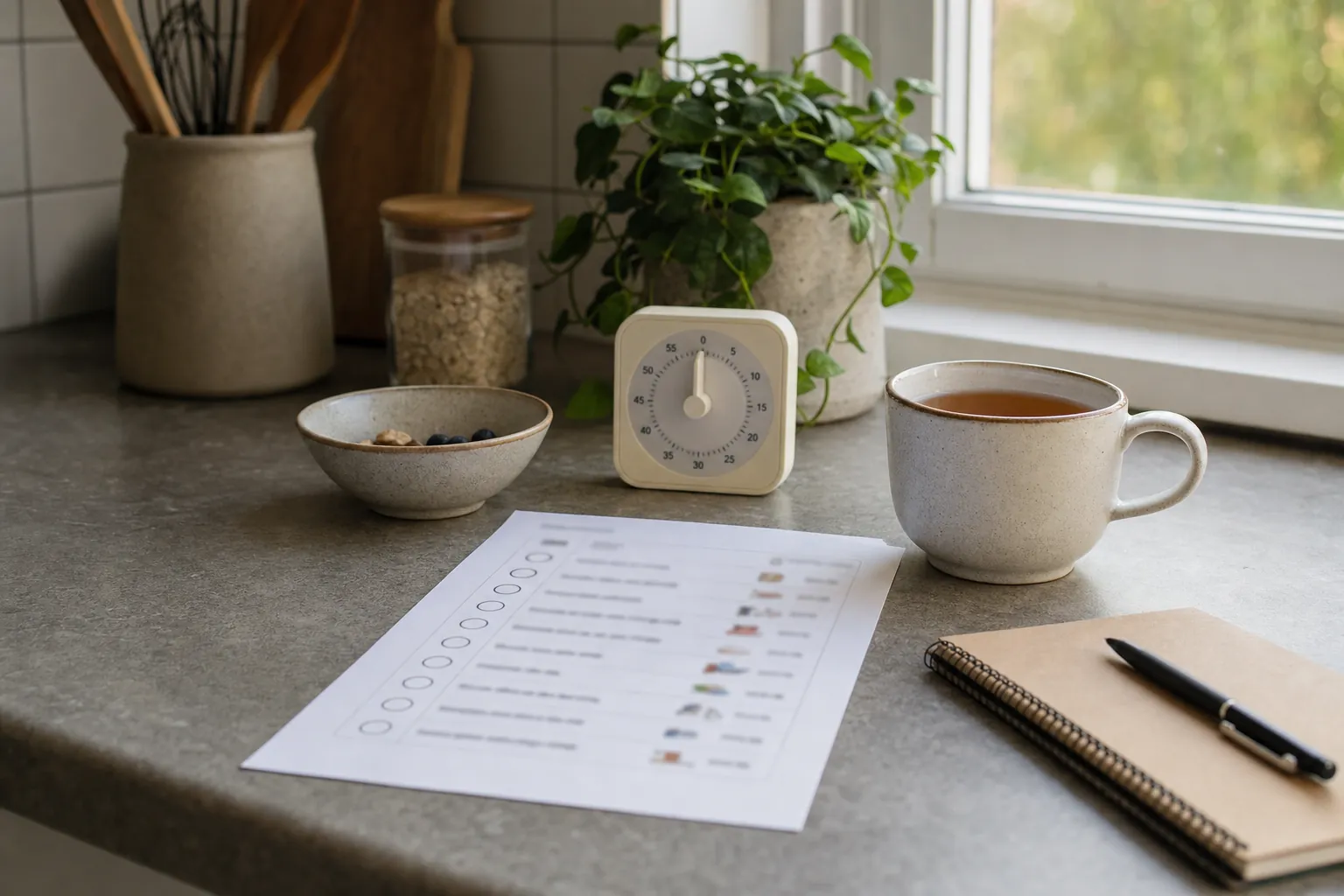
- Simple timers and alarms. A kitchen timer can support a task that needs attention later, such as laundry or an appointment to leave the house. Choose one sound that is easy to recognize and test it together.
- Step-by-step task cards. Write down the steps for routines that have become frustrating, such as making coffee, using a remote, or preparing for a shower. Place the card where the task happens, not in a notebook across the room.
- Labels that describe the contents. A clear label on a drawer or shelf can remove a daily guessing game. Keep language familiar and use large, high-contrast lettering. Avoid relabeling everything at once, which can make a well-known room suddenly feel unfamiliar.
- A weekly planning conversation. Set aside a calm time once a week to look at the calendar, upcoming needs, and any changes to the routine. This works best as a conversation, not a report card.
- A notes notebook or simple phone note. Keep one designated place for information worth saving, such as a question for a clinician, a contact name, or a plan for tomorrow. The habit of using one place matters more than the tool itself.
- Consistent visual cues. A coat on its hook, shoes by the door, and a tote in its usual place can cue the next action without another spoken reminder. Cues work quietly in the background.
- A brief “pause and check” routine. Before leaving home, use the same three questions: Do I have my keys? My phone? My plan for where I am going? Repetition can turn a small check into a dependable habit.
Do not introduce all ten at once. Pick one or two that address a specific source of stress. If the first choice does not stick, that is useful information, not a failure. Adjust the placement, simplify the wording, or choose another tool that feels more natural.
Give Each New Support Time to Become Familiar
Even a good memory aid can feel awkward at first. A calendar only becomes helpful after it has been checked in the same place for several days. A key tray only works after it becomes part of arriving home. Build in a short adjustment period before deciding whether a tool is useful. During that period, the goal is practice, not perfection. A simple note about what helped and what got in the way can guide the next adjustment without turning the routine into another source of pressure.
It can help to make the first use visible and shared. Put the first appointment on the calendar together. Walk through the new “leaving home” check once before a real errand. Try the timer during an easy task rather than waiting for a busy day. These small rehearsals turn a support from an idea into part of the routine.
Be wary of systems that require too many steps. A complicated device, a lengthy password, or a long list of alerts can create more frustration than support. If a tool requires a care partner to constantly troubleshoot it, simplify. A paper note, a familiar clock, or a small basket may be the more dependable choice.
Build a System That Is Easy to Find
A memory aid works only if it can be found and understood in the moment. Make the important information visible, stable, and simple. Keep the calendar in the same place. Put the notebook in the same bag. Use the same words for the same tasks. When a routine changes, change the cue that goes with it.
It also helps to reduce competing information. A refrigerator covered in old notices, several lists with conflicting instructions, or a phone full of alarms can make it harder to see what matters now. One current system is more supportive than several half-used systems.
For people who prefer a paper-based approach, a single binder or folder can hold appointment notes, contact details, questions, and documents to review. For people who prefer digital tools, a shared calendar with a trusted care partner may be enough. There is no prize for using the most modern option. The right system is the one that makes daily life feel steadier.
Make the information easy on the eyes, too. Use large writing, plain language, and enough empty space for the next important detail to stand out. Put instructions close to the task they support. A note about the dishwasher belongs near the dishwasher. A reminder to take a tote belongs by the door. The fewer mental steps between cue and action, the more likely the support will help.
When a routine changes, name the change clearly. Cross out an old instruction rather than leaving two versions side by side. Move a cue with the object it belongs to. Review the system after a move, a new appointment schedule, or a change in who is helping. A supportive environment is not static. It responds to real life while keeping its basic landmarks familiar.
How Care Partners Can Help Without Taking Over
A good support system should protect autonomy as well as safety. Start with curiosity: “What part of this feels hardest?” “Where would you expect to find that?” “Would it help to make a place for this near the door?” These questions invite collaboration instead of turning every missed detail into a correction.
Keep reminders brief and specific. A calm cue such as “The calendar is on the counter” is often more helpful than a long explanation. Build the system together, then leave room for the person to use it in their own way. The Family Caregiver Alliance’s overview of mild cognitive impairment and family support emphasizes that changes in thinking can affect both the individual and the people close to them, which makes communication part of the practical work.
Support can also mean recognizing when a task needs a different plan. If one person is managing the calendar but another is still carrying every reminder in their head, the system is not yet shared. A weekly check-in, one visible schedule, and agreed-upon roles can make care feel more sustainable for everyone.
Try to separate the person from the problem. A missed step is a signal that the system may need adjusting, not evidence that someone has failed. This matters because shame and urgency can make it harder to accept help. A respectful pause, a practical cue, and a chance to try again often protect more dignity than rushing in to complete the task.

When to Ask for More Support
Practical supports are useful, but they are not a reason to ignore meaningful changes. If memory or thinking changes are new, accelerating, causing distress, or affecting safety and independence, seek guidance from a qualified healthcare professional. The UCSF Memory and Aging Center’s overview of MCI is a helpful reminder that evaluation should consider the whole picture, including how changes show up in everyday life.
When a household needs a steadier framework for daily routines, conversations, and meaningful independence, Lovejoy Institute’s Cognitive Continuity offers education centered on noticing, adapting, and preserving what matters. It complements appropriate medical care and treatment with practical support for building a life that works with change.
A Place to Begin
Start with the part of the day that asks too much.
Use Lovejoy’s free checklist to identify one source of daily friction, then choose one small support to try.
Frequently Asked Questions
What are memory aids for mild cognitive impairment?
Memory aids are simple tools and routines that move important information out of memory and into the environment. A calendar, a written routine, a key tray, an alarm, or a notes app can make a task easier to start and finish. The best aid is the one a person will actually use consistently.
Which memory aid should I try first?
Start with the moment that causes the most friction. If appointments are missed, try one calendar in a visible location. If keys disappear, create one landing place near the door. If a multistep task is getting harder, write down the steps where the task happens. Make one change, then give it time to become familiar.
Can memory aids replace medical care?
No. Memory supports can make daily life easier, but they do not diagnose or treat a condition. A new, sudden, or worsening change in memory, judgment, language, mood, or ability to manage daily activities deserves a conversation with a qualified healthcare professional.
How can a care partner help without taking over?
Ask what feels difficult and build the support together. Keep choices simple, use a calm tone, and leave room for the person to lead where they can. A shared system works better when it protects dignity as well as convenience.